Performances ahead:
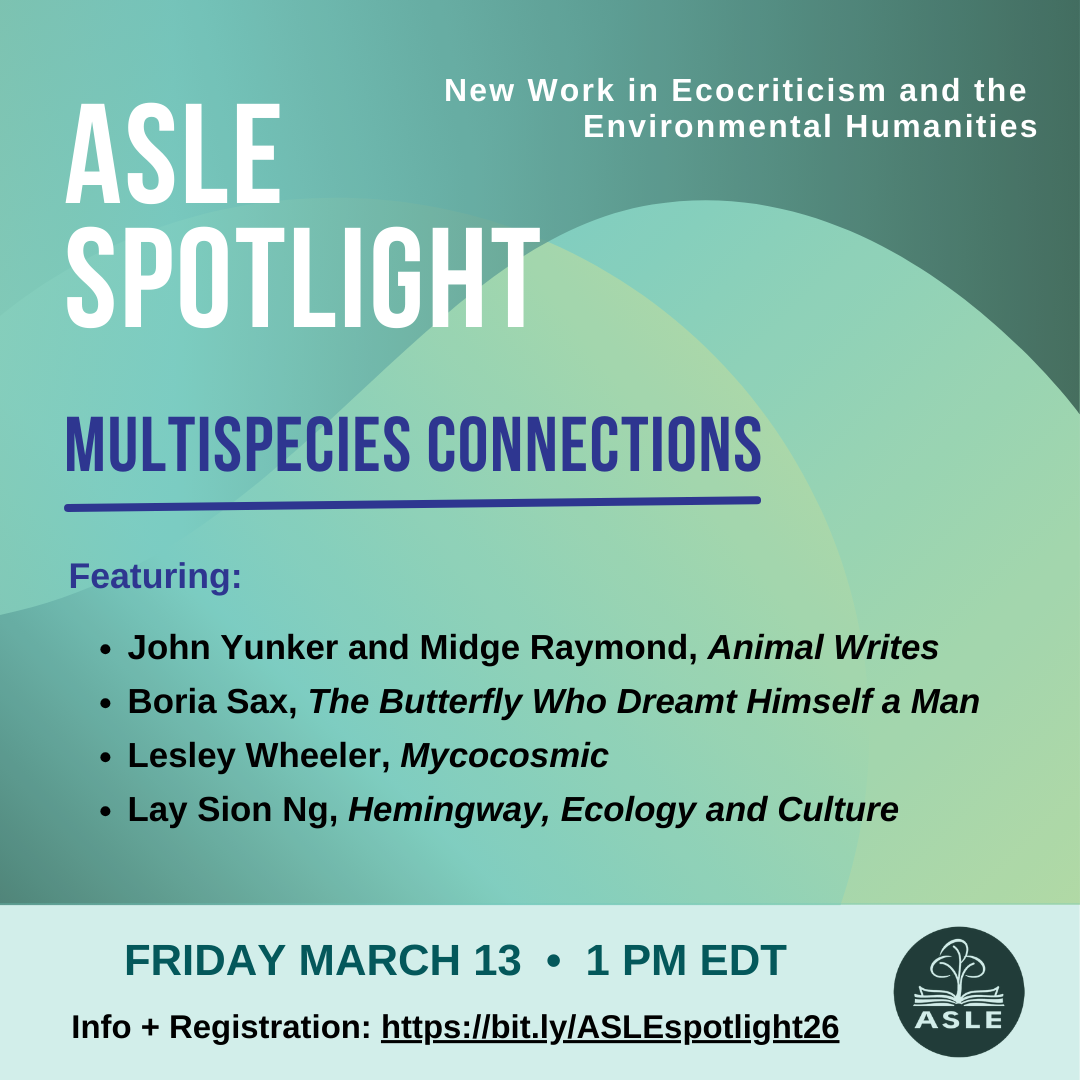
- An ASLE Spotlight Zoom conversation on Friday the 13th, 1 pm EDT, information and registration here;
- A reading at the Moss Museum at Ohio Wesleyan, Wednesday March 18th, 4:15 pm;
- A reading at Two Dollar Radio Headquarters bookstore in Columbus, Ohio, Friday March 20th, 7 pm, with David Baker and Aza Pace.

Now filing out of the auditorium for a while: AWP and Shenandoah.
A friend of mine, describing a thorny family situation amid the hubbub of AWP’s Book Fair, tried to say, “I shouldn’t use scare quotes.” The phrase came out “square coats.” Square old me, standing there in my favorite velvet blazer–I hadn’t realized how foggy and chilly Baltimore would be and didn’t pack a warm jacket–was delighted by the phrase. I haven’t yet figured out how to write a square-coated poem in response, so have at it: there’s your post-writing-conference poetry prompt. It makes me think of a labwear, weird fashion, and a career of costume changes.
I realized at some point during this convention that it’s 20 years since I attended my first AWP, in Texas. I didn’t know anyone in 2006 and approached AWP less artistically than critically: how are the readings and panels framed, and what literary values do those formats express? How do writers represent their affiliations through their performance styles and self-presentations, scare quotes and square coats? I’d been learning how to look and sound like a literature professor, and my attendance, after all, constituted research (I analyzed the conference, alongside other ways poetry manifests in public, in a 2008 scholarly book, Voicing American Poetry: Sound and Performance from the 1920s to the Present).
The 2006 AWP panels, while closely resembling those at scholarly conferences in format, seemed scattershot in quality. The scholar in me was shocked by how little background work some presenters seemed to do preparing for them. AWP panels are better now, yet I attend fewer of them. I’m interested in many of the topics. I’m just running around in my writer hat: connecting with old and new friends over lunch or tea, doing signings and off-site readings, checking out the Book Fair.
In 2026, I can report on only one AWP panel that wasn’t my own. Early on, I lost my hand-written list of what I planned to attend, along with my favorite water bottle, thus ramping myself up quickly to Maximal AWP Disorientation, a condition that eventually takes down many conference-goers. I forgot the time of one panel I’d been determined to make; I got shut out of another, “Poetry and the Sacred” (room at capacity).
The panel I did squeeze into, though, was funny as well as thoughtful. (I couldn’t see if they were wearing thematically appropriate outfits, since the room was full and I sat way in the back.) “Alternative Nation, or Whatever: Gen X Perspectives on the Writing Life” reminded me about the wars, epidemics, economic crises, and toxic prejudices of the late twentieth century AND the mixtapes, miniseries, and problematic literary smashes (Flowers in the Attic, anyone?). Tara Betts talked about reading as a pleasure and a freedom–and how hard that reality can be to translate to her students now. Most presenters addressed the stereotypes of slacker, wiseass nihilist, and the “loser with pointless integrity” (that’s a quote from Matthew Zapruder’s poem “Generation X,” discussed by B. K. Fischer). Paisley Rekdal described the literary culture she entered as a Gen Xer: creative writing workshops, mostly taught and enrolled by white people, characterized literary subjectivity and political engagement as naive, anti-intellectual, and anti-aesthetic (a position espoused VERY strongly in the scholarly world, too, where only the avant-garde among contemporary writers seemed to be breaking into the canon). Rekdal cited Cathy Park Hong’s influential critique of this attitude in “Delusions of Whiteness in the Avant-Garde”. (I flashed back to the modernism conferences where male Language poets in leather jackets held court in the hotel bar.) Gen X writers, according to Rekdal, went on to break down some of those attitudes and open a lot of doors–but remarked that our generation is also responsible for the current accommodationist ethos in universities. I’d like to hear a whole keynote by Paisley Rekdal one day. As I might have put it in the 80s, she’s wicked smart.
I presented on a panel called “How Form Informs the Form: Received & Original Forms in Manuscript Organization,” arranged by Donna Vorreyer and including Taylor Byas. (Of two other scheduled panelists, one had the flu and the other lost institutional funding, absences that felt very Winter 2026.) I love the topic of manuscript structure in poetry, a problem I’ve pondered alternately in my poet’s beret and scholar’s mortarboard. I spent time analyzing early 20th century collections once and realized how many books feature clusters of related short poems, perhaps using the same form or addressing similar subjects. Sometimes it’s an official sequence, like Donna’s heroic sonnet crown in Unrivered or Taylor’s “Sculpture Studies” in Resting Bitch Face. There are two basic principles for arranging such clusters: alternation and, for lack of a better word, clumping. Sometimes poets put an anomalous sequence in the middle of the book or otherwise section it off (think of Rita Dove’s Thomas and Beulah, two intersecting narratives, each occupying half of a split book). More often authors, including Donna and Taylor, disperse the sequence throughout the collection. No matter what organizational devices seem right, foregrounding them helps readers get what the book is up to, and when readers get it, they’re more likely to stick with you (and perhaps forward your ms up the chain at a contest). It’s an important art relying on different skills than those we develop in writing individual poems.
This AWP, in short, brought a good share of fun conversations. I also noticed my greater sense of belonging than in 2026. I’ll never be the best-dressed person at AWP, the fancy-pants with a standing-room-only crowd, even though my mediocre conference hotel DID upgrade me to a penthouse suite (big but also cold, and the single elevator with a long wait nearly made me late for my panel–I eventually took the service elevator and ran five blocks). Yet it’s not lonely and dispiriting to do a book-signing anymore. People come by wanting to talk; my books sell out. While I’m a better poet than before and Mycocosmic is my best collection–plus all those readings in 2025 gave me experience in how to pitch it to strangers–I think being Poetry Editor of Shenandoah makes me visible, too, to people who might not have given me a second look before. It’s a boatload of unpaid work, so I guess I deserve a little boost from it, but I wonder if the glow will wink out immediately whenever I step down. We’ll see.
I was going to write more here about this reading season for Shenandoah, just wrapped up, but I’ve gone on too long already. I’ll add: there’s a ton of great work out there, and we all need to remind ourselves about that when rejections inevitably arrive. I turned down a lot of poems I enjoyed and admired (and felt guilt and regret about it); another editor could have put together a strong table of contents that hardly overlapped with mine at all. Persistence matters. I love to mix poems by grad students with poems by established bigshots, but I’m also gratified when I can give the nod to someone who has been submitting good poems repeatedly without luck. One accepted poet told me he’d been trying Shenandoah unsuccessfully for twenty years, and I cheered.
As far as fashions: ghazals are trending. Weird words that recurred: rubato, echolalia. Many animals and insects prowled these poems, and you’ll spot a zoo-full in next year’s poetry sections, including ticks, sloths, and foxes. I always look for different styles and moods to bring range, but this time I found myself searching harder for variety in subject matter, too. As well as poems of rage, love, and panic, there will be poems about prison, football, moteliers, and Star Wars. Parent-child relationships continue to feature–they’re big subjects for a lot of poets, including me–but so do friendships and struggles among siblings.
Consumed by Submittable, I didn’t finish reading a single book in February. Still, it’s an honor. I’d just rather skip the penthouse next time.


6 responses to “Square coats: AWP & Shenandoah”
Wish I could have been at that GenX panel – sounds like fun! My first AWP was Chicago 2004. It was definitely an experience – and very different than it is now. I interviewed for a job at Missouri Review – a tech editor job helping them set up a technical submission system – I was passed over for a dude who left after six months.
Yes, you would have liked it! Silly Missouri Review.
“Maximal AWP Disorientation” — I love that, because it is so true. I wish I could have been there since it was relatively nearby this year (for me), but. Funny that I saw you in Los Angeles last year, which is so far from home! Thanks for your informative precis of the event and GO YOU for selling out Mycocosmic!
I had fun playing a little with your square coats prompt! The result isn’t much to speak of, but maybe someone else can run with it:
Square coats
Velvet blazer or tweed jacket
with elbow patches: which is more
square? Perhaps they are equally
square gendered equivalents.
How about a white lab coat
with pockets, or a power suit
whose shoulder pads rival
those of linebackers?
A coat made of quilt
blocks or granny squares
is square in essence,
regardless of shape.
Buffalo check jackets
feature squares but lack
the necessary connotation
and construction.
But the most iconic
and truly square coat
must be an old-fashioned
coachman’s box coat.
Love it! I’m now thinking of armor, too, which would be another valid AWP fashion choice.
[…] Lesley Wheeler, Square coats: AWP & Shenandoah […]