-
Arts and humanities in annular eclipse

John Guillory writes in Professing Criticism, a 2022 book, that literary criticism “originated millennia ago, achieved a maximal state of organization in the twentieth-century university, and now faces an uncertain future” (xv). He begins with a well-known story: nineteenth-century literary critics were self-trained journalists publishing in periodicals, while universities concentrated on philology–language instead of literature.…
-
Walking: a footnote

I just finished “Traversals: A Folio on Walking,” guest-edited by Anna Maria Hong and Christine Hume for the summer 2023 issue of The Hopkins Review. Walking and poetry have so many intersections: they foster observation, thinking, feeling, and talking; prompt unexpected encounters; depend on rhythm; and sometimes resemble each other even structurally, because meditation and…
-
Writing about poetry with AI
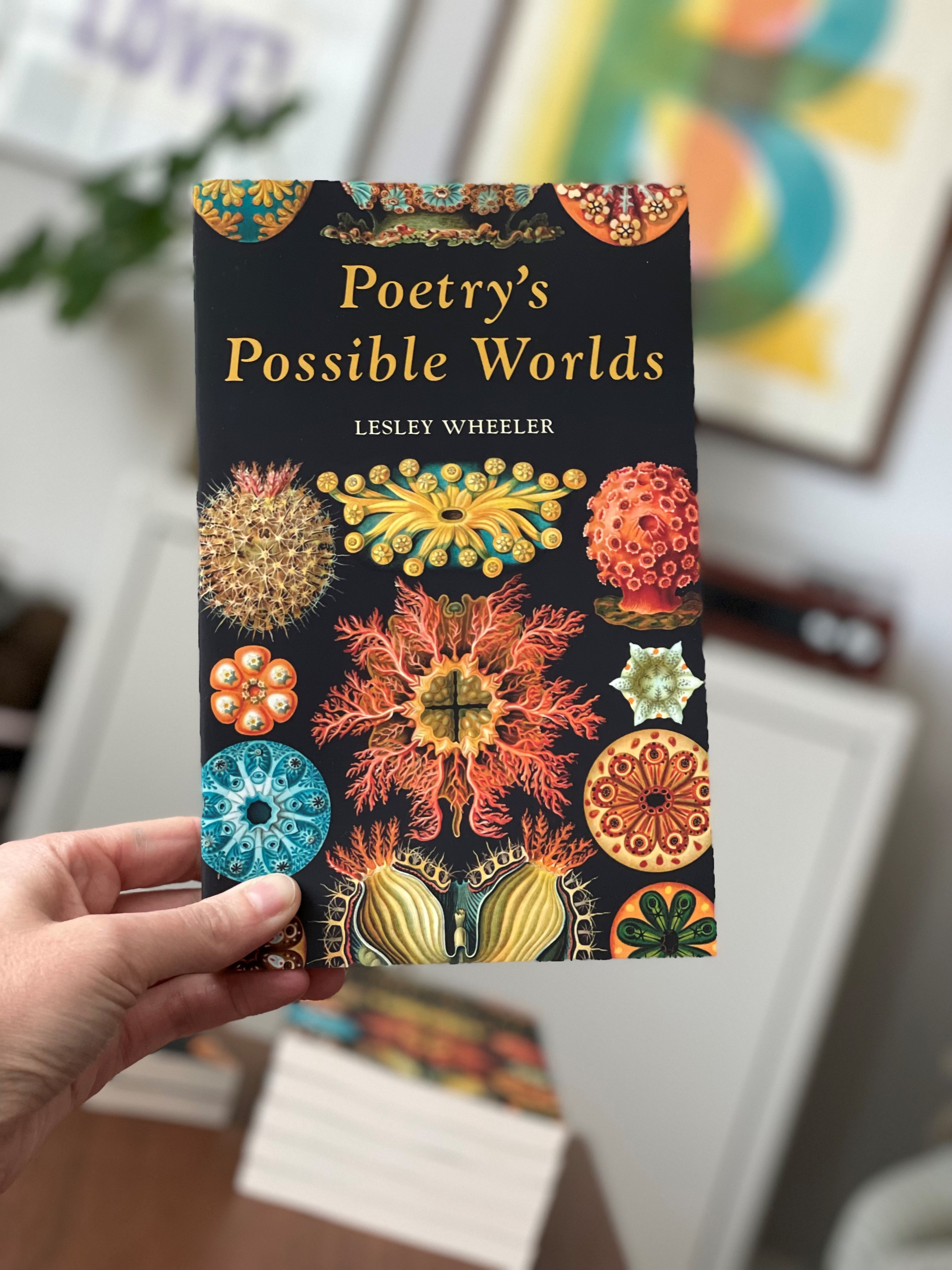
Poetry’s Possible Worlds emerged from years of teaching undergraduates who don’t believe that learning how to write academic essays about literature has long-term relevance to their lives. Many of my students, though, enjoy–or can be surprised into enjoying–reading, thinking, and talking about books and poems, so the puzzle has been: how do I make writing…
-
Summering, ephemera
-
Voyaging to and through Poetry’s Possible Worlds

May 17th is the one-year birthday of my first nonfiction book, Poetry’s Possible Worlds. Bringing the threads of my life together, it interweaves a story about reading contemporary poetry during personal crisis; critical reflections on how poetry works; and cognitive science about how the process of reading can change people. I was considering a wide…
-
Mycocosmic and plutonic

Big news arrived this week: Wednesday morning, I talked by phone with Jeffrey Levine, who told me that Diane Seuss had named my next poetry book, Mycocosmic, runner-up for the Dorset Prize, and they want to publish it with a $1000 honorarium, likely in winter 2025. I said yes. I’m still stunned. My adoration for…
-
Occult AWP

-
Sprains, scams, and spells
March got ahead of itself, blowing in like a lion well before February’s end. Everything seems to be on the move–including me, although I sprained my ankle last week by glancing down at an irritating text as I was walking home, tripping down a short flight of steps, and landing hard. Such a classic consequence…
-
Flares, small and celestial
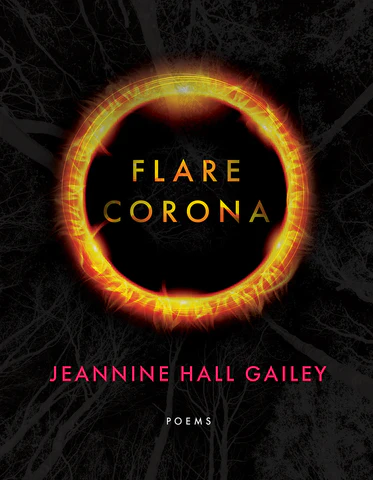
I’ve been thinking about smallness, so it was fascinating to read, this weekend, Jeannine Hall Gailey’s dazzling new poetry collection, Flare, Corona, a book that explores parallel crises on many scales, from the microscopic to the telescopic. I plan to teach it so I snagged an advance review copy, but it’s now available for pre-order…
-
She carries me
In the Belly As a woman carries an insect, unconscious of the sign it shapes with diplomatic footfalls across her skin, she carries me. As a lake lifts the sky’s image, all burnished admiration, or proffers a crushed cup, a leaf, a rainbow slick of grease. As your network of neurochemicals and electricity carries, through…