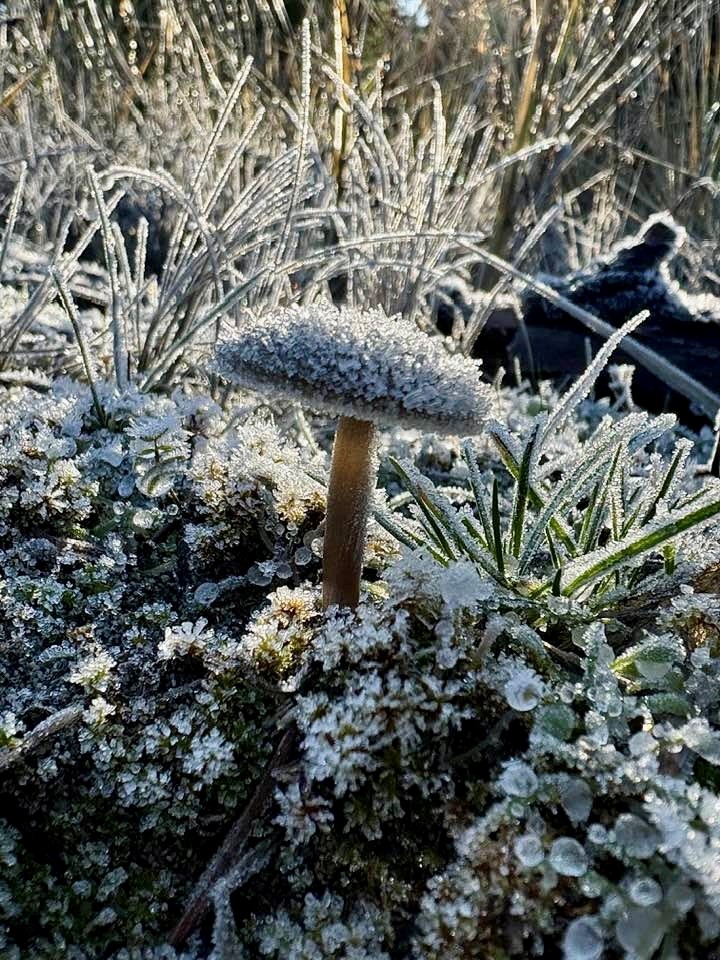
I planned to get my third novel started this January, and I have. I wasn’t far in, though, before my brain started playing hooky. Psst, Lesley, I have a poem idea for you. Poetry always seems to prefer a sidewise approach, when I’m looking the other way. There’s nothing to do but obey.
Arthur Sze’s 2025 collection Into the Hush, however, is also to blame for any bloom of inspiration. These days I often feel struck silent by horror. What can I possibly say about ICE abductions and cities under assault by their own government that others aren’t saying more powerfully? Hey, um, most of us are glad for Greenlanders’ sake that they’re NOT part of the US? So I found myself all the more impressed by how Sze, in the face of so much nightmare, bears poetic witness. These meditative poems brim with wondrous gestures and small creatures closely observed, including spiders crawling across laptops and sipping from taps. In the opening poem “Anvil,” though, butterflies and apple trees share space with the names of vanishing languages, reports of human violence, and how “a matsutake emerges from out of the rubble of Hiroshima.” Somehow these juxtapositions carry argument without becoming argument. Understanding the technique inspires me to try the same.
Sze’s mode is anti-pastoral or, as Joyelle McSweeney writes, Necropastoral: moving through a “political-aesthetic zone in which the fact of mankind’s depredations cannot be separated from an experience of ‘nature’ which is poisoned, mutated, aberrant, spectacular, full of ill effects and affects.” His abiding interest in mushrooms and mycelium epitomizes this (and I think you could make a related argument about his lichens–the book’s cover image is of algae). I recognize kinship between Into the Hush and Mycocosmic in Sze’s fascinations. That precious matsutake in Hiroshima’s rubble conveys how nature persists in trying to transform death; underground mycelial webs link us all.
Foraging, though, barely mentioned in my book, is one of this collection’s central metaphors and activities. Foraging relies on committed attention–bearing witness, in a way. Further, Sze’s mushrooms manifest in negative fashions, too. They’re instrumental to uneasy commercial transactions in “Vectors.” In “Užupis,” Sze recounts how “when an invisible cloud of radioactive dust / settled on spruce and birch forests, // foragers picked and dined on mushrooms / only to wake, convulse, die.” Necropastoral again: this world is beautiful but poisoned by its human dependents. Fungus hands our failures right back to us. (Note: most of these poems, when online, seem to be paywalled at The New Yorker, but you can access “Užupis” and a couple of others here. I especially love the last, “Winter Solstice.” But the whole book is worth looking for, if you have the means.)
One last thought about this lovely and moving book: many of the poems are in the second person. Sze is reaching out poetically, mycorrhizally, hoping to forge connections across complex terrain. He’s such a good pick for U.S. Poet Laureate in these wrecking-ball times.
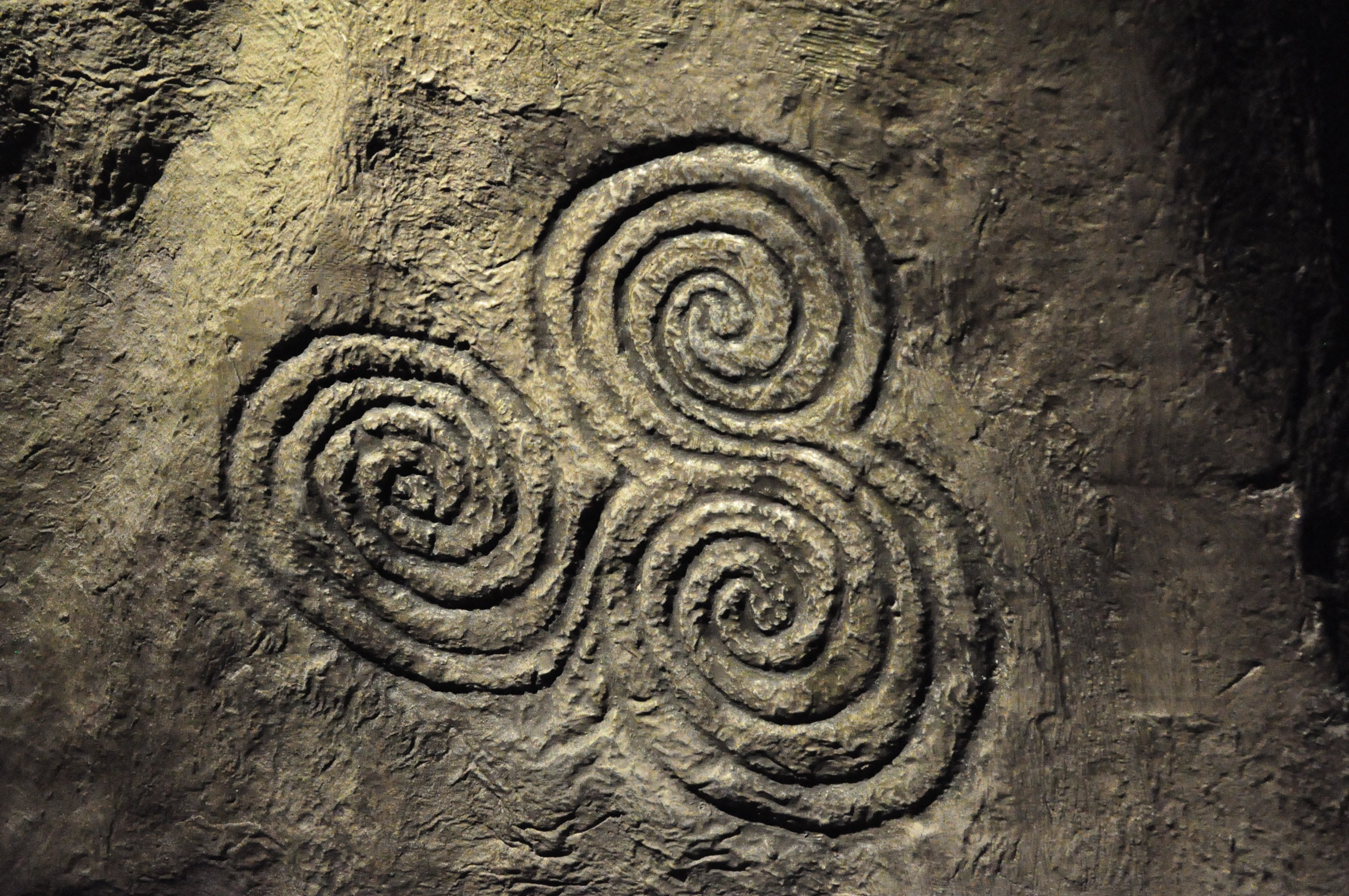
I hope you’re nourishing yourself with poems which, unlike mushrooms, are rarely toxic. If you have a taste for my latest, find it in New Verse Review. “Ghost Triskelion” emerges from one of my other obsessions: spirals. I’ve been writing strange little sonnet trios in slant rhyme with the pattern abcdefg gfedcba, a form I’ve “invented,” if a person can say that about any sonnet-crown-like construction. My hope is that the poems interlock like triskeles, those old talismans of life-death-rebirth and the hinges among them. This is the first “triskelion” I’ve published, with thanks to the editor and founded of New Verse Review, Steve Knepper. In any case, I’m very much mid-project and collecting inspiration, so please give me a shout if, on your foraging strolls, you meet an interesting spiral in life or art.
Here’s where I’ll appear these next weeks, if not snowbound long-term:
- Jan. 29, 5:30 pm: Reading and Workshop at Rockbridge Regional Library in Lexington, VA: “Writing from the Underworld”
- Feb. 3, 9:00 pm EST: Bardic Trails reading (virtual, see Telluride Institute’s calendar for link)
- Feb. 6, 6:30-9:00 EST: Guardians of Wonder: Writing What We Must Not Lose, A Poets’ panel with Paul Guest, Charlotte H. Matthews, Kiki Petrosino, & Hayden Saunier, sponsored by Botanical Garden of the Piedmont, Bolick Center, PVCC Campus, Charlottesville, VA (register here and you’ll receive a free book!)
Also, a note for anyone in submission mode: Shenandoah opens to poetry on Feb 1, and we tend to hit the cap of 500 batches fast (3-4 days in the past few years, though I hear the last fiction call hit the cap in 12 hours!). We’re focusing on poets who haven’t published work with us at all or in several years. In any case, please stay safe, warm, and connected.
 LESLEY WHEELER
One response to “Arthur Sze’s mushrooms”
I just read Richard Powers’ Bewilderment and “necropastoral” seems totally fitting for that novel and for many other poems and etc. I’ve been reading lately. Love Sze! He was visiting author at Goddard during a semester I was there. Also these photos are lovely. Also, now I will have to try a triskelion! Thank you for all the ideas and your terrific reading recommendations.
LikeLike