
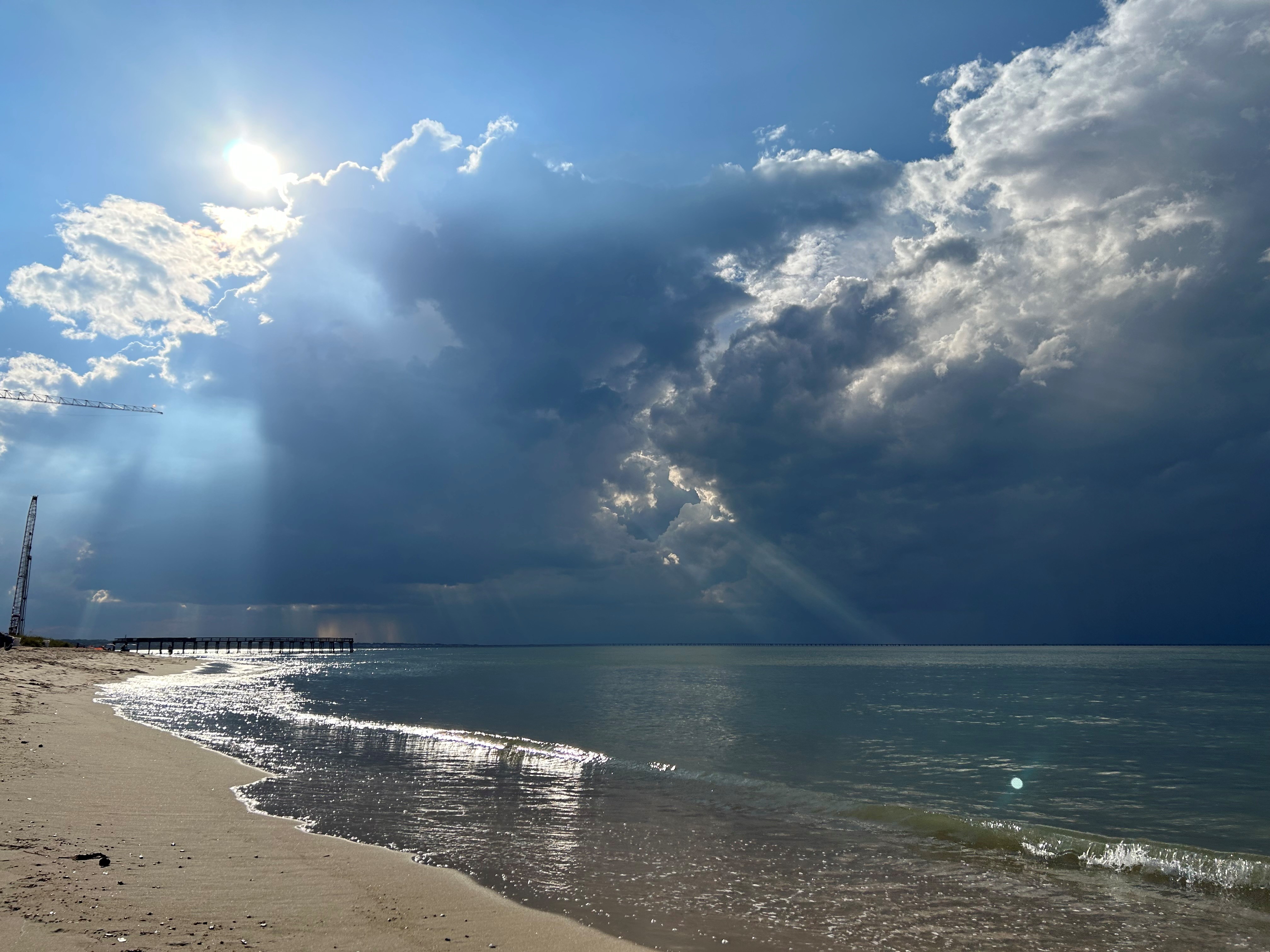
Anxiety, my medical people agreed about those heart palpitations I mentioned in my last post, then proceeded to treat me with pills, needles, and reminders about breathing techniques. Some combination of those is starting to help, as well as a three-day breather we just took at the beach, a landscape that seems to help me more than any other. But it’s been a rough few months. I have legitimate worries, as almost all of us do: many people close to me have been struggling through rough transitions. Mostly, though, anxiety is just happening to my body, like an infection.
Some advice for handling revved-up doomy emotions comes from mindfulness strategies: notice that you’re feeling anxiety but don’t identify with it; let bad thoughts blow past. Certainly a root cause, brain chemistry, is beyond my control except for my choice to seek treatment. It’s a rare relative of mine who doesn’t have an anxiety disorder, so there’s heritability in the mix. But I also learned vigilance from my family and from assaults I experienced as a young adult: you never knew when the next cruelty would land, so you’d better brace yourself. And my profession rewards anxiety. Worry about deadlines and overperformance have served me well in academe. Anxiety seems like my history, personality, and ongoing physical experience of the world, even as I wonder why it’s surging now and struggle to let it go.
I’m lucky enough not to have to teach in the summer, so this is my “productive” season as a writer, to be academic-capitalist about it, but my ability to concentrate has ebbed and flowed (an anxiety symptom). That’s okay, I keep reminding myself; I’m not in a publish-or-perish crisis. But I’m also seeking artist residencies and funding because of another job-related gift: I’m eligible for a sabbatical in Fall 2025 and I’m hoping to find a few extra resources to stretch it to a year. Listing achievements, pitching projects, asking for references (the Guggenheim requires four!!!)–it’s all about shouting, I am worthy! while repressing ferocious self-doubt. A hard trick when you’re trying to right an anxiety tailspin. Yet in this case there are real deadlines, and I owe it to the work I’ve been doing to put myself in the running.
The project that has crystallized in my occasionally clear brain, during the last year or so, is sort of a prequel to Poetry’s Possible Worlds. Community with the Dead: Reading Modernism Strangely will consist of experiments in literary criticism that honor the weirdness of modernism itself: each essay, as in Poetry’s Possible Worlds, blends scholarship with storytelling, but in this case each adapts a different structure to the material. Think of hermit crab essays, if you’re a nonfiction person. I’m finishing an essay mimicking a ten-card Tarot spread, discussing H.D.’s use of Tarot. Last year I published “Ghost Tours” in The Hopkins Review, an essay about poetry and walking that relegates repressed experience and histories to a footnote underworld.* I’m planning to adapt other published pieces and produce new work, too. It’s serious fun in the mode of creative scholarship I’ve been advocating for as fiercely as I’m able. Someone should fund it, right?
I specialized in modernist poetry in graduate school and have taught it for decades, over the years I was also strengthening my own literary skills, so in a way I’ve been spiraling around this project for my whole career. My latest bit of modernist scholarship, of a more traditional kind, appears in collection Eliot Now, edited by Megan Quigley and David E. Chinitz, just published by Bloomsbury. The collection looks rich and up-to-date, full of good provocations. My short piece, “Glossing The Waste Land,” addresses how two women poets, Jeannine Hall Gailey and Paisley Rekdal, invoke The Waste Land in work about sexual violence.
The Waste Land is an anxious poem written by a much younger person than I am, although I think most find the poem’s battle with despair more prominent. Gailey and Rekdal, I think, are writing toward healing in a way he wasn’t yet able to. I think I am, too, in the hybrid work I’ve been writing. I’m bridging parts of myself as well as parts of the discipline of English studies. Wouldn’t it be brilliant if it worked?
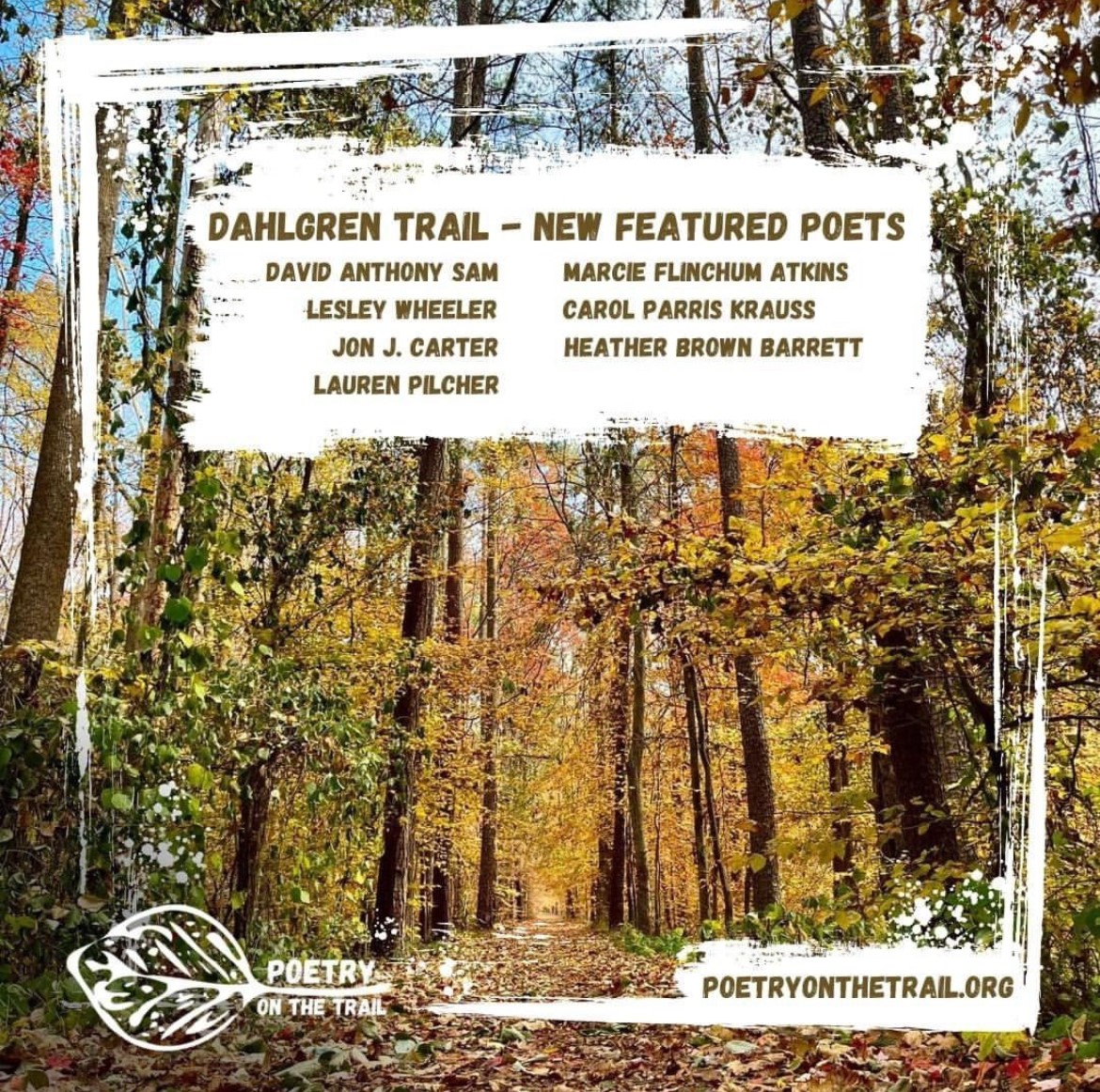
*On the subject of walking: my poem “Tone Problem” is going to be part of a Poetry on the Trail project! Thanks to Jenna Veazey for her hard work and vision. This will be on the Dahlgren Railroad Heritage Trail in Fredericksburg, Virginia, a road trip for me, but I’m looking forward to it. Walking is another move that cures what ails me.
 LESLEY WHEELER
9 responses to “Beginning a hybrid project, anxiously”
Just starting at that gorgeous beach photo would help calm me. Good luck with throwing your anxieties away and congrats on all your successes.
LikeLiked by 1 person
Oops. I meant ‘just staring’
LikeLiked by 1 person
Thank you, Lisa!
LikeLike
“it’s all about shouting, I am worthy! while repressing ferocious self-doubt. A hard trick when you’re trying to right an anxiety tailspin.” Seriously, a hard trick under ANY circumstances!
You describe several of the many reasons I am glad I never was a poet in academia. But I applaud you for your courage, talent, and stick-to-it-iveness. And may you get your grant(s)!! You are worthy.
LikeLiked by 1 person
Thank you! And I’ll take any and all blessings on grant roulette, so thank you for that, too.
LikeLike
Thumbs up for the beach days and thumbs up for the book. Both take you (and the book will take us) on walks where nothing is the same as it was yesterday and where the changed details and the eternal canvas are both mysteriously entwined. We get to go with you on that second journey.
LikeLiked by 1 person
That’s so kind, thank you!
LikeLike
That prequel to Poetry’s Possible Worlds sounds exciting.
That The Waste Land is suffused with the aftermath of sexual violence should be self-evident, yet so long overlooked. Women reading the poem and having their power to speak of that made that element of TWL clearer for me.
Like Ann E Michael above, I feel your dread on the fellowship pitches. It’s hard enough to write well — and then one finds out you need to prove with evidence and numbered exhibits how you did it and will do it again!
LikeLiked by 1 person
“Numbered exhibits” is the perfect way to do it.
LikeLike